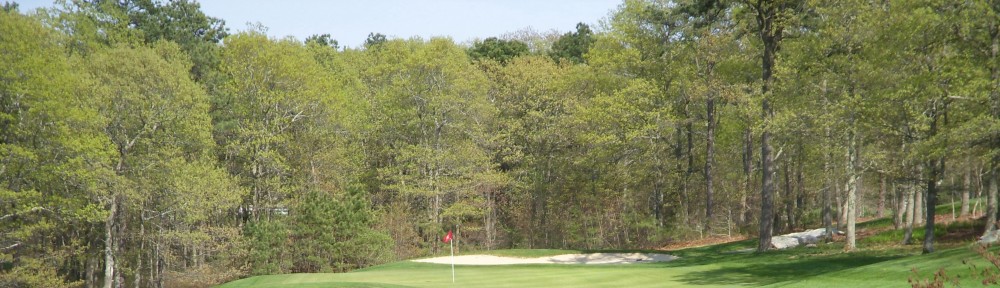
One of the interesting things about golf is that the same course can play so differently day to day due to weather, which tees you play, and pin placement. The Olympics are a great example of the how differently a course can play and how important course setup (by the tournament officials) is to the competition. Course setup this week is the responsibility of Kerry Haigh (who’s regular day job is PGA of America’s Chief Championships Officer, setting up courses for the PGA Championship and Ryder Cup).
Another unique aspect with back-to-back men’s and women’s competitions is the added issue of “comparison.” It’s only natural that viewers will compare how the men and women play and so course setup is critical. As a female golfer and fan of women’s golf, the last thing I want to see is viewers assuming the men “are better” than the women because they don’t understand course conditions or course setup.
The course was setup for the men as a Par 71 (at 7,174 yards) and for the women a Par 72 (at 6,374 yards). Obviously the difference is to take into consideration the differences between the men and women. The general difference (stated by many experts in the golf world) is that the men’s game has more power and distance and the women are more accurate . However, some would argue the 6,374 is still a bit long for women. Why? Because on some holes the yardage difference is not enough to allow the women to hit the same club for their approach shot as the men. After a practice round, one of the women French golfer’s said that the male golfer for her country hit an iron into a green and she hit a 3-wood. It is much harder to make a 3-wood land and stop on a green.
I’m sure Haigh wants to make the setup a fair test for both events; but there were a few decisions I found very odd. First, he lowered the rough in the third cut (or the rough well off the fairways) and he did not lower the rough in the first and second cuts. Given that the statistics show the women are more accurate off the tee and less likely to have wild misses, this change makes no sense especially when the argument for lowering the rough is that the women do not have the same wrist strength as the men which is why rough is often cut differently. That logic would say the length should have been changed in all three levels of rough.
The other odd decision (made for the atmosphere of the opening hole) was a last minute decision (the day before the start of the tournament) to have the women play off the same tees as the men did for the opening hole. The first hole (originally) for the women was stated as 386 yards (then men’s tee set up for 419 yards). As expected having the women play from the men’s tees (419 yards) did now help the women. As one reporter noted for the women golfers, the opening hole “played as the most difficult hole of the first round, averaging more than 0.4 strokes over par and yielding just seven birdies against 24 bogeys or worse.” I understand the desire of the Olympic planners to have a “stadium vibe” but the first tee decision to move the ladies back to the men’s tees clearly hurt the women on day one.
The week the men played, the course was “soft” because it rained every night and that meant the men could go pin seeking (the ball would hit the green and not roll out excessively). There was barely any wind (a major defense of the course) and the air temperature was also relatively mild and it was humid during the week the men played. That made the course “easier” because the men did not face the ball rolling out on the fairway into the rough. There were many holes where the men could just hit a fairway wood to get in a good position in the fairway. This was a big advantage given the men have much greater dispersion (missing the fairway into the deep third rough cut) with driver.
Comparatively the course is playing very differently for the women. Round one the women faced a much firmer course due to no rain, no humidity, and lots of sun shine; plus the wind was starting to become a factor. So when the men could hit 3-woods, the women golfers needed to hit drivers to put themselves in the same position in the fairway for a good approach shot. The result of using drivers meant the women were seeing good shots roll out of the fairway into the rough. They also had fewer opportunities to go pin seeking having to play for the roll out of a long iron (or wood) onto a green. The weather forecast for Saturday (the day of medal play) is 90 plus degrees which will make the course even firmer.
After day one, there are statistics that show the course was harder for the women. For example, the number of players under par on day one were significantly different: Men under par was 41 and women under par was 12. Also the scoring average on day one for the men was 69 and the scoring average for the women was 74. This is not about skill but about how the course was presented to the players (soft vs firm, no wind vs windy, humid vs no humidity in the air, speed of greens, etc.). One analyst, during the broadcast, noted her surprise of many pin placements given the changes in the weather conditions for the women’s event.
These differences made the course more challenging for the women and more challenging for the course setup director Kerry Haigh. It will be interesting to see if Haigh (and other’s involved in course setup) make changes after day one. Will they cut the rough? Will they go back to the original tee selection for the opening hole? Will they change pin locations if the wind picks up? I don’t want to see the setup be so easy it’s a birdie fest but I want the women to have the same approach shot opportunities as the men did last week.
 Golf Expectations